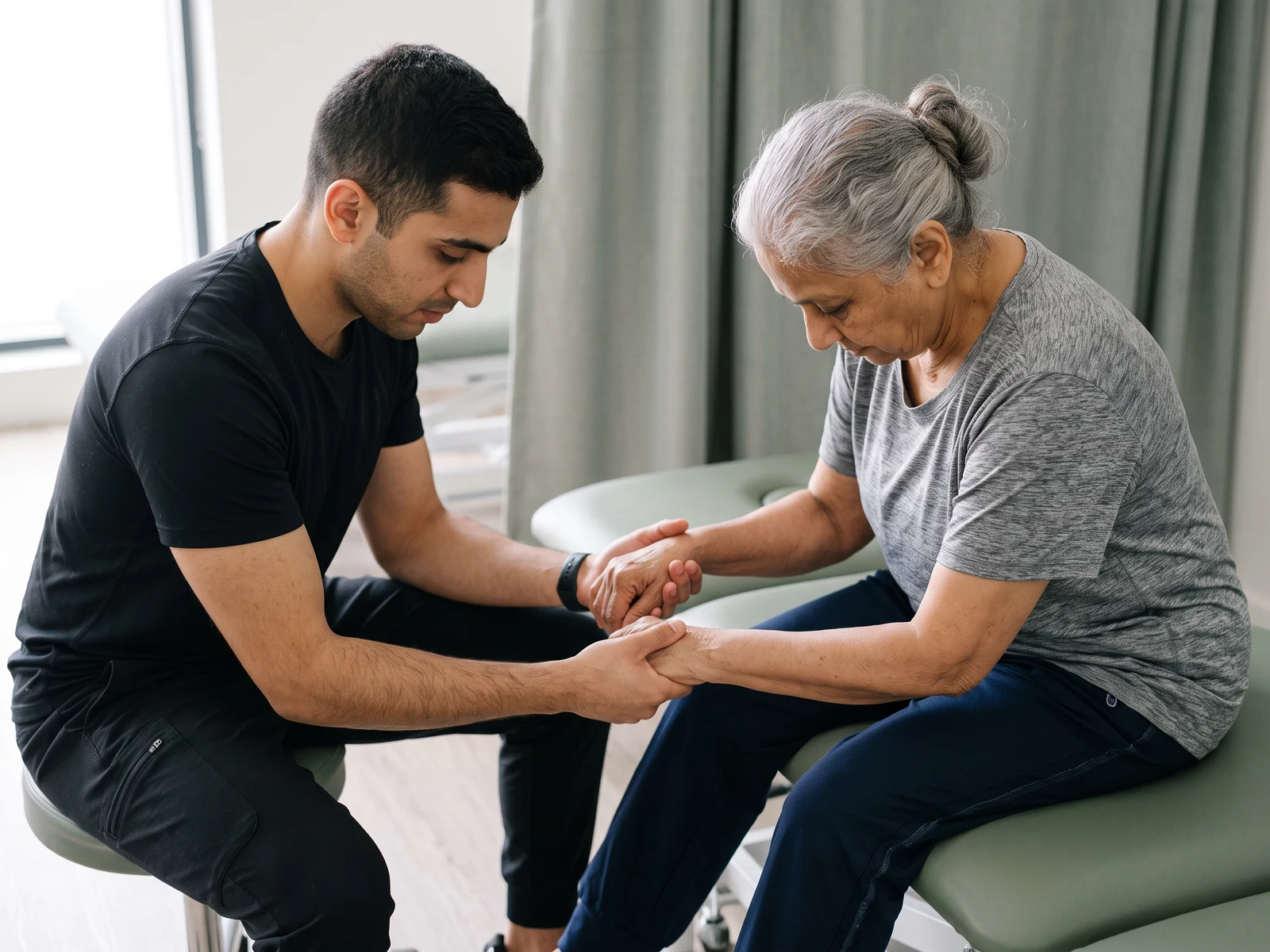
For decades, posture has been oversimplified.
Sit up straight.
Pull your shoulders back.
Tighten your core.
Stop slouching.
Many adults have spent years trying to “fix” their posture by forcing themselves into rigid positions — only to end up feeling tighter, stiffer, and more frustrated.
At Vitality At Home Physical Therapy in Grand Rapids, we approach posture very differently.
Because posture is not about holding your body perfectly still.
It is about how efficiently your body moves, balances, breathes, adapts, and responds to the demands of everyday life.
And often, the people struggling most with posture are not lazy or weak.
Their bodies are simply compensating.
Compensating for:
- Stiffness
- Stress
- Pain
- Weakness
- Fear of movement
- Breathing changes
- Limited mobility
- Previous injuries
- Reduced movement variability
The good news?
The body is incredibly adaptable.
And physical therapy can help improve posture in a way that feels more natural, sustainable, and functional — without forcing the body into rigid “perfect posture.”
The Problem With Traditional Posture Advice
Most posture advice focuses on appearance.
Stand taller.
Shoulders back.
Chest up.
But posture is much more complex than how someone looks standing still.
The body was never designed to hold one “perfect” position all day long.
In fact, even technically “good posture” becomes stressful if maintained rigidly for hours.
The human body thrives on:
- Movement variability
- Rotation
- Weight shifting
- Breathing
- Mobility
- Adaptability
When posture becomes overly rigid, the body often develops:
- Muscle tension
- Fatigue
- Breathing restrictions
- Reduced mobility
- Increased joint stress
- Poor movement efficiency
Ironically, many people trying hardest to improve posture unintentionally increase muscular guarding and stiffness.
Posture Is Really About Movement Efficiency
Healthy posture allows the body to:
- Absorb force efficiently
- Move fluidly
- Maintain balance
- Conserve energy
- Rotate naturally
- React to changing environments
- Breathe effectively
Poor posture is rarely about laziness.
More often, it reflects how the body has adapted over time.
For example:
- Tight hips may pull posture forward.
- Thoracic stiffness may round the shoulders.
- Weak glutes may alter pelvic positioning.
- Poor breathing mechanics may elevate the shoulders.
- Pain may create guarded movement patterns.
- Balance deficits may increase rigidity.
The body is constantly trying to create stability.
Sometimes it simply chooses inefficient strategies to do so.
Why Posture Often Changes After 50
As we age, the body naturally changes.
Recovery slows.
Mobility decreases.
Strength changes.
Balance reactions become less automatic.
Movement variability often decreases.
At the same time, modern lifestyles contribute heavily to postural changes.
Many adults spend years:
- Sitting more
- Driving more
- Looking at screens
- Moving less variably
- Avoiding uncomfortable movements
- Carrying chronic stress
Over time, these habits influence:
- Rib cage mobility
- Hip mobility
- Walking mechanics
- Breathing patterns
- Balance strategies
- Muscle activation
The result is often a body that feels:
- Stiff
- Tight
- Fatigued
- Heavy
- Less coordinated
- Less stable
Many adults assume this is simply “aging.”
But often, the body simply needs better movement options again.
Physical Therapy Looks Beyond the Painful Area
One of the biggest misconceptions about posture-related discomfort is the idea that the painful area is the true problem.
In reality, the body functions as a connected system.
For example:
- Neck pain may relate to thoracic stiffness.
- Low back pain may relate to limited hip mobility.
- Shoulder tension may relate to breathing mechanics.
- Balance changes may affect walking posture.
- Foot stiffness may influence the entire kinetic chain.
This is why physical therapy should never focus solely on isolated stretching or strengthening.
At Vitality At Home, we assess how the entire body works together.
Because improving movement efficiency throughout the system often reduces strain naturally.
Breathing Plays a Huge Role in Posture
This is one of the most overlooked pieces of posture training.
Breathing directly affects:
- Rib cage positioning
- Core coordination
- Neck tension
- Spinal stability
- Balance
- Movement efficiency
Many adults unknowingly breathe using their neck and shoulders all day long.
This often contributes to:
- Upper trap tightness
- Neck stiffness
- Rounded posture
- Fatigue
- Reduced postural endurance
Physical therapy often helps restore:
- Rib cage mobility
- Diaphragm function
- Pressure management
- More efficient breathing patterns
When breathing improves, posture often improves naturally.
Walking Mechanics Matter More Than People Realize
Walking is one of the most repetitive activities humans perform.
Small inefficiencies repeated thousands of times daily significantly affect posture over time.
Common posture-related walking changes include:
- Reduced arm swing
- Shortened stride length
- Forward trunk lean
- Limited hip extension
- Reduced trunk rotation
- Guarded gait patterns
These changes often develop gradually and quietly.
Many adults simply notice:
- More fatigue
- Less confidence
- Stiffness
- Feeling “older”
- Reduced endurance
Physical therapy frequently improves posture by improving how the body walks and transfers force during movement.
The Goal Is Not Rigid Core Bracing
Many people think posture means constantly tightening the stomach and “engaging the core.”
But excessive bracing often creates:
- Breath holding
- Increased tension
- Reduced mobility
- Hip overuse
- Neck tightness
- Fatigue
The body was designed for adaptable stability.
True core function involves:
- Coordinated breathing
- Pressure management
- Rotational control
- Weight shifting
- Efficient movement transfer
The goal is helping the body feel supported without becoming rigid.
Better Posture Often Starts With Better Mobility
Many adults try strengthening exercises while completely ignoring mobility restrictions.
But the body cannot move efficiently if:
- The thoracic spine is stiff
- The hips do not extend well
- The rib cage cannot expand
- The ankles lack mobility
- Rotation is limited
Physical therapy often focuses first on restoring movement options.
Because when the body moves more freely, posture frequently improves automatically.
Strength Still Matters — But Functional Strength Matters Most
Strength absolutely matters for posture.
But not in the way many people think.
Postural strength is less about:
- Holding rigid positions
- Isolated muscle exercises
- Aggressive abdominal training
And more about:
- Endurance
- Coordination
- Balance
- Rotational control
- Weight shifting
- Functional movement capacity
The body needs strength it can actually use during everyday life.
Posture Training Should Improve Confidence, Not Create Fear
Unfortunately, many adults become fearful of movement because they have been told:
- Their posture is bad
- Their spine is fragile
- They are “out of alignment”
- They should avoid bending or twisting
This often creates more guarding and stiffness.
The body becomes less adaptable over time.
At Vitality At Home, our goal is not creating fear around posture.
Our goal is helping people feel:
- Stronger
- More capable
- More confident
- More mobile
- More resilient
Movement confidence is one of the most powerful things physical therapy can restore.
Small Changes Create Big Results
Improving posture rarely requires dramatic interventions.
Often, meaningful changes come from:
- Improving walking mechanics
- Increasing thoracic mobility
- Restoring hip extension
- Building postural endurance
- Improving breathing patterns
- Strengthening glutes
- Reducing prolonged static positions
- Improving rotational mobility
- Restoring movement confidence
Small changes repeated consistently create powerful long-term effects.
The Goal Is Freedom of Movement
This is important.
Most adults do not care about achieving “perfect posture.”
They want to:
- Walk comfortably
- Exercise confidently
- Garden
- Golf
- Travel
- Keep up with grandkids
- Stay independent
- Feel strong
- Move without fear
That is what good posture should support.
Not appearance.
Function.
You Are Not Meant to Feel Stiff and Fragile
Many adults assume stiffness and movement fatigue are unavoidable parts of aging.
But often, the body simply needs:
- Better movement variability
- Improved mobility
- Strategic strength
- More efficient coordination
- Better breathing mechanics
- Reduced compensation patterns
The body is remarkably adaptable at every age.
And when movement improves, posture often improves naturally alongside it.
Looking for Help With Posture, Balance, or Movement Issues in Grand Rapids?
At Vitality At Home Physical Therapy, we help active adults throughout the Grand Rapids area improve posture, mobility, balance, strength, and movement efficiency so they can continue doing the things they love with greater confidence and less pain.
Our approach focuses on helping the body move better as a whole — because posture is not about perfection. It is about creating a body that feels strong, adaptable, and capable for the long haul.
Because living your best life never gets old.
Call us today at 616-414-2271 to schedule an evaluation and learn how physical therapy can help you move with greater comfort, confidence, and freedom.