Hip & Knee Pain Treatment in Grand Rapids
The first steps in the morning are the hardest, and stairs, chairs, and longer walks keep reminding you the joint is not what it was. If your hip or knee is deciding what you can and cannot do, one evaluation is where that starts to change.
What causes hip and knee pain?
Hip and knee pain rarely comes from a single problem. The knee is caught between the hip and the foot, and when either one is weak, stiff, or off-balance, the knee pays the price. Understanding which piece of the puzzle is broken is the key to fixing it. Without that clarity, you end up treating the pain while the real problem stays active.
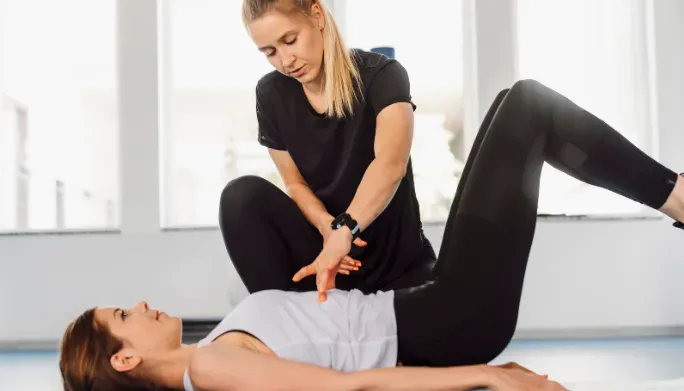
Osteoarthritis is the most common reason hips and knees start to ache as we age. The smooth cartilage that cushions the joint gradually thins, so the bones work harder and the joint feels stiff, especially first thing in the morning or after sitting a while. A diagnosis of arthritis is not the end of the road. Strong muscles around the joint take pressure off the worn surfaces, and the right movement keeps the joint comfortable and moving well.
A joint replacement is a fresh start, but the recovery is where the result is won or lost. In the weeks after surgery the goal is to restore range of motion, rebuild the muscles that weakened before the operation, and get you walking safely and confidently again. Guided, gradual rehab in your own home means you practice on your real stairs, your real chair, and your real bed, so the strength you build actually transfers to your day.
The hip muscles control how your leg lines up with every step. When the glutes and hip stabilizers are weak or underactive, the knee is forced to twist and absorb loads it was never built to handle. Over time that shows up as knee pain, even though the knee itself is not the real problem. Waking up and strengthening the hips often settles the knee without ever treating it directly.
When getting up from a chair, climbing the stairs, or stepping into the car becomes something you plan around, it usually points to a mix of stiffness and lost strength. The joint tightens, the muscles fade, and everyday movements start to feel unsafe. These are exactly the motions we can rebuild, and practicing them where you actually do them, at home, is what makes the progress stick.
An ankle sprain, a fall, or a knee that was hurt years ago and never fully rehabbed can leave lasting changes in how you move. You compensate without realizing it, and years later the hip or knee that has been picking up the slack finally complains. It is rarely too late to correct those patterns and take the strain off the joint that hurts.
The meniscus is the knee's shock absorber, and cartilage cushions the hip and knee alike. Both wear down gradually over the years, sometimes with no single injury to blame. While severe damage occasionally needs a surgeon, most wear responds well to easing the load on the joint, strengthening the muscles around it, and moving in ways that protect what is there.
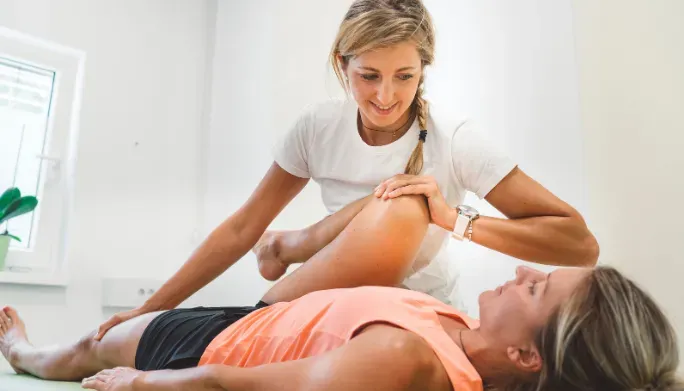
How physical therapy in Grand Rapids helps.
Hip and knee pain is one of the most treatable conditions we see, and because we come to you, we get to see the whole picture: how you rise from your own chair, climb your own stairs, and move through the home where you spend your days. We start by finding exactly what is driving the pain, whether that is arthritis, weak hips, stiff ankles, or strength lost after a joint replacement. We ease tight tissues with hands-on work and restore the motion the joint has lost. Then we rebuild strength in the right places, especially the hip and thigh muscles that protect and unload the knee. Every visit is one on one with your Doctor of Physical Therapy for the full hour, in your own space. And there is no hassle to get started: Michigan is a direct-access state, so no referral is needed, we come to your home, and we help you understand your coverage and give you an honest timeline before we begin. The goal is not just less pain. It is hips and knees strong enough to carry you through the day, on your terms.
What to expect from your recovery.
Assessment
In your own home, we look at how you move your leg, how your hip works, how your knee tracks, and how your foot lands. We test your strength, your flexibility, and your balance. We find the real driver of your pain, not just the place where it hurts.
Release and mobility
We use hands-on work to release tight muscles in the hip, knee, and ankle. We restore the movement your joints have lost. We reduce pain so you can start moving better without guarding or limping.
Strength and control
We rebuild the muscles that control your hips and knees, especially the stabilizers that protect your joints. We teach you how to move through your everyday life without re-creating the problem. The strength we build is what keeps you pain-free long after therapy ends.
After fracturing my kneecap I was in a leg brace for six weeks and could not drive. A home-based rehab service like Vitality was a perfect match. Excellent care and a full, successful recovery.
Pain rarely travels alone.

Back Pain & Sciatica
The hips and lower back work together. Hip weakness often drives lower back pain and sciatica.
Foot & Ankle Pain
A weak or stiff foot changes how you walk, which puts stress on the knee and hip. Treating the foot stops cascade pain.
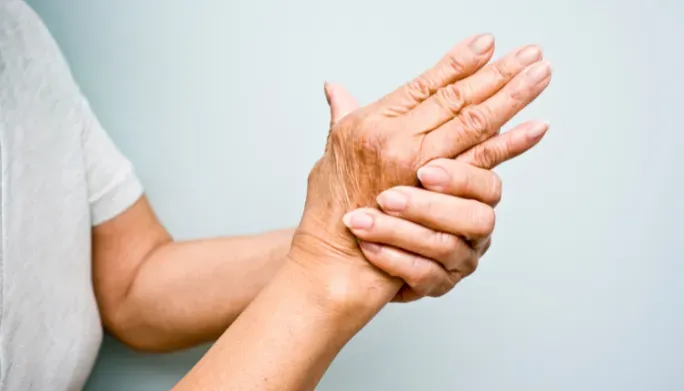
Arthritis
Arthritis in the hips and knees is manageable when the muscles around the joint are strong.