


Have you ever returned from a vacation, illness, busy month, or stretch of bad weather and thought, “Why does this feel harder than it used to?”
You probably did not lose all your strength in a week. But you may have lost something else: practice.
Movement confidence is built through repeated experiences.
• We walk the stairs.
• We cross the yard.
• We get in and out of the car.
• We carry groceries.
Our brains learn, “I know how to do this.”
Then routines change.
Confidence Is Not Just a Personality Trait
Movement confidence is partly based on evidence your brain has collected.
Every successful walk, stair climb, curb, workout, or trip through a busy store reinforces the idea that your body can handle that task.
When you stop practicing something, uncertainty can creep in.
That is why a person may feel completely comfortable walking around the house but uneasy at an airport, stadium, crowded restaurant, or uneven park—even when they technically have enough strength to do it.
Fall Schedules Can Quietly Reduce Practice
September is full of routine changes.
• Travel slows down.
• Grandkids return to school.
• Clubs and volunteer commitments restart.
• Medical appointments fill the calendar.
• Daylight gets shorter.
You may still feel busy while actually getting fewer minutes of meaningful movement.
Busyness and physical activity are not the same thing.
Avoidance Can Reinforce Uncertainty
When something feels harder, the natural response is often to avoid it.
• You take the elevator instead of the stairs.
• You stop walking on grass.
• You let someone else carry the bags.
• You skip an outing because parking will require a longer walk.
Those decisions can be reasonable in the moment. But if avoidance becomes the default, your brain receives less evidence that you can still perform the activity.
Confidence can shrink even when your underlying ability is still trainable.
Rebuild Confidence With Graduated Practice
The answer is not to force yourself into situations that feel unsafe. It is to find the right-sized challenge.
• If a half-mile walk feels intimidating, start with five or ten minutes consistently.
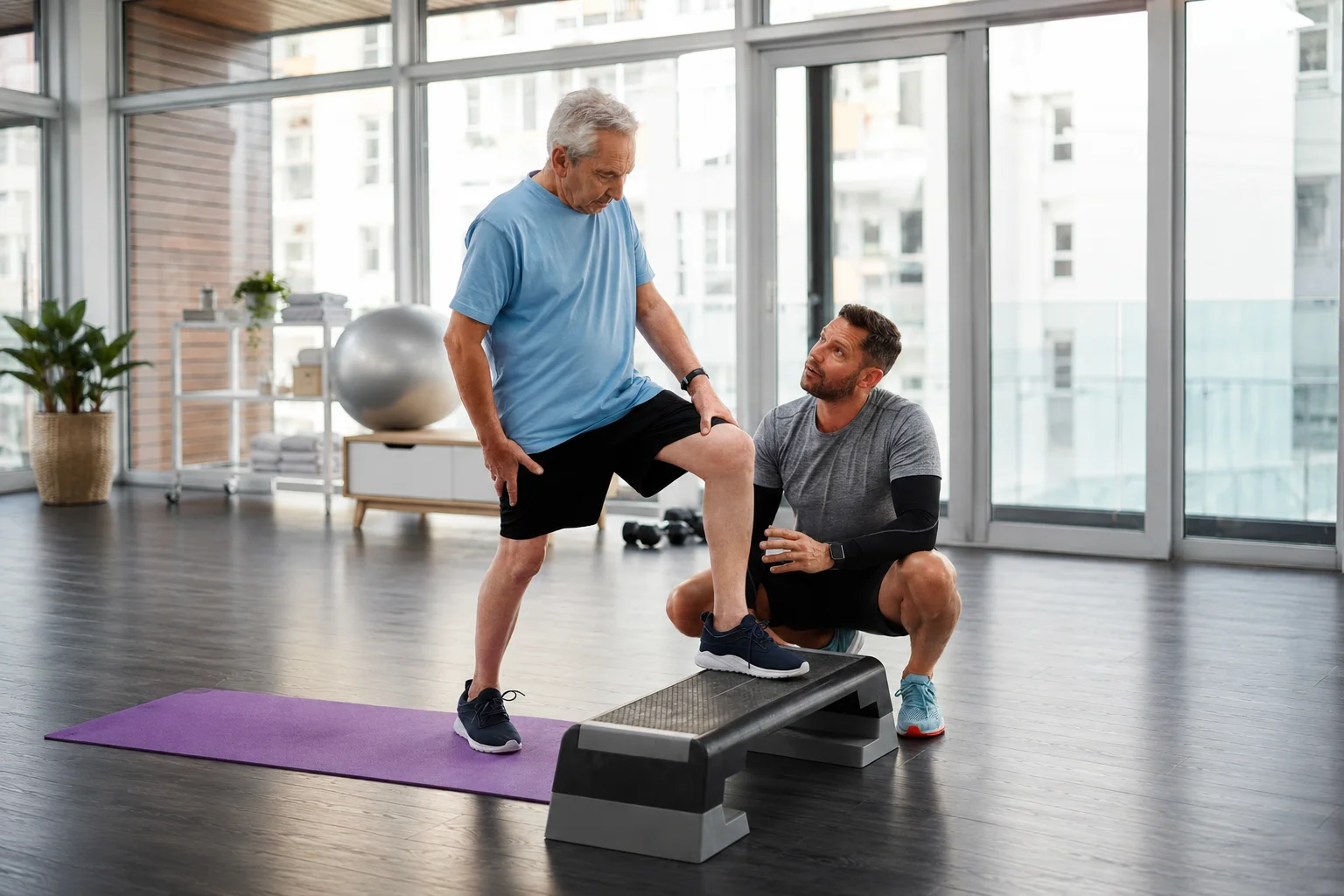
• If stairs feel uncertain, practice step-ups with support.
• If crowds throw off your walking, begin by practicing head turns or carrying a light object while walking in a controlled environment.
The goal is progressive exposure: enough challenge to create adaptation, but not so much that every session feels like a test.
Measure What You Can Do
Confidence becomes more powerful when it is connected to objective ability.
A physical therapist can assess:
• walking speed
• endurance
• lower-body strength
• dynamic balance
• transfers
• other functional skills
That gives you a starting point and something concrete to improve.
Instead of “I think I’m getting worse,” you can say, “Here is where I am today, and here is what we are working toward.”
That shift matters.
Keep Your World Big
At Vitality At Home, we do not want older adults organizing their lives around everything they are afraid might happen.
We want you building the capacity to keep participating.
If a routine change has left you feeling less confident, treat that feeling as information—not a verdict. Your body may simply need practice, progression, and a plan.
Our team provides one-on-one in-home physical therapy throughout Greater Grand Rapids and West Michigan, helping older adults improve strength, balance, endurance, and confidence in the places they actually live and move.
Call 616-644-9155 if you would like help figuring out what is limiting your movement confidence and how to build it back.