

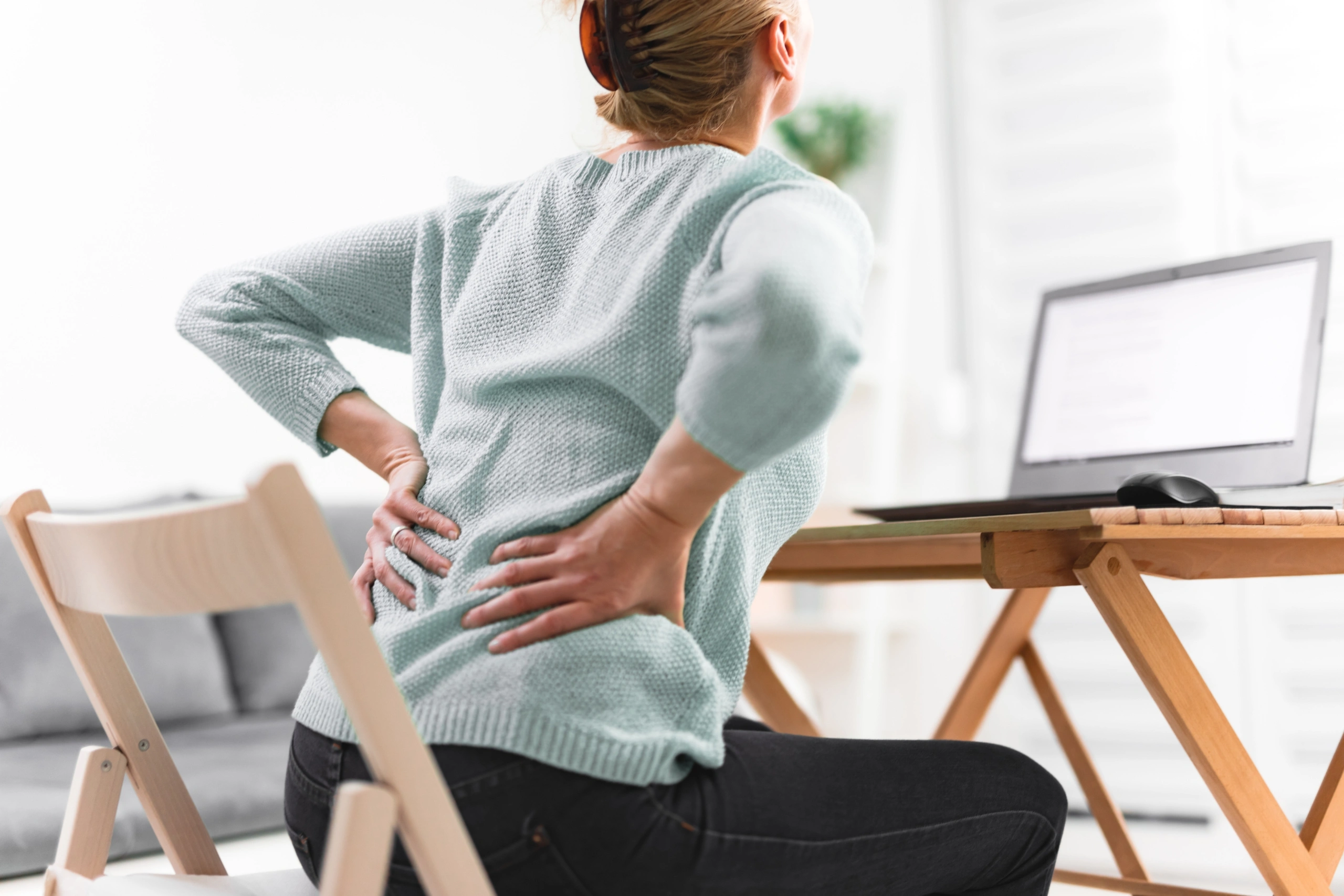
Most people do not injure their back picking up a pencil.
And most people do not suddenly “throw out” their hip from one small movement.
Instead, pain often develops much more quietly.
It builds over time through repeated movement habits, subtle compensations, prolonged positions, and accumulated strain that slowly overload the body day after day.
That is why so many active adults say things like:
- “It came out of nowhere.”
- “I woke up stiff one morning.”
- “It started gradually.”
- “I didn’t even do anything.”
- “I just feel tighter and more achy than I used to.”
At Vitality At Home Physical Therapy in Grand Rapids, we see this all the time.
Many adults over 50 are not dealing with a major injury. They are dealing with years of movement patterns that have slowly become less efficient, less balanced, and more physically stressful on the body.
The good news?
The body is incredibly adaptable.
Once you identify the daily habits contributing to stress and strain, small changes in movement can create meaningful improvements in pain, stiffness, mobility, and energy.
Pain Is Often an Accumulation Problem
One of the biggest misconceptions about hip and back pain is the idea that pain always equals damage.
In many cases, pain is actually the result of accumulated stress exceeding the body’s current capacity.
Think about your body like a system constantly responding to load.
Every day, your joints, muscles, tendons, and nervous system adapt to:
- Sitting
- Standing
- Walking
- Lifting
- Reaching
- Twisting
- Driving
- Sleeping positions
- Exercise habits
- Stress levels
- Recovery
When movement variability decreases and repetitive strain increases, the body often starts compensating in ways that eventually create discomfort.
This is especially common in adults who are:
- Busy
- Active
- Caregiving for others
- Working long hours
- Sitting more than they used to
- Exercising inconsistently
- Pushing through discomfort
- Spending long periods in the same positions
Over time, the body stops distributing force efficiently.
Certain areas begin doing too much work while others stop contributing enough.
That imbalance is often where pain begins.
The Problem Usually Is Not Just “Getting Older”
Many adults assume hip and back pain are inevitable parts of aging.
While the body absolutely changes over time, pain itself is not simply a normal consequence of birthdays.
What often changes with age is:
- Strength
- Mobility
- Recovery capacity
- Activity levels
- Movement variability
- Balance
- Muscle coordination
- Joint loading patterns
Unfortunately, modern lifestyles accelerate many of these changes.
The body thrives on regular movement variety.
But many people now spend large portions of the day:
- Sitting
- Driving
- Looking at screens
- Standing in one position
- Repeating the same motions
- Avoiding movements that feel uncomfortable
The result is often stiffness, weakness, reduced rotation, altered gait mechanics, and poor force distribution throughout the body.
Eventually, the hips and lower back begin absorbing stress they were never meant to handle alone.
The Hip and Low Back Are Deeply Connected
The hip and lower back function as a team.
When one area loses mobility or stability, the other almost always compensates.
For example:
- Limited hip extension can increase stress on the low back during walking.
- Poor glute strength may increase strain through the lumbar spine.
- Reduced thoracic rotation can force the low back to rotate excessively.
- Stiff ankles can alter walking mechanics all the way up the chain.
- Weak core coordination may increase hip flexor overuse.
This is why isolated stretching or generic strengthening programs often fail to create lasting results.
The body moves as a system.
Pain rarely exists in isolation.
Everyday Habits That Commonly Contribute to Hip and Back Pain
Most people are surprised to learn how much everyday movement habits matter.
The issue is usually not one dramatic event.
It is the repetition of subtle stressors over months and years.
Sitting More Than Your Body Can Tolerate
Sitting itself is not bad.
The problem is prolonged sitting without enough movement variation.
Long periods of sitting can contribute to:
- Hip flexor tightness
- Reduced glute activation
- Stiff thoracic spine
- Decreased spinal rotation
- Increased pelvic compression
- Reduced circulation
- Core deconditioning
Many people then stand up and expect their body to immediately move efficiently after hours of stillness.
The body often responds with stiffness and compensation instead.
Constant Weight Shifting While Standing
Many adults unconsciously stand primarily on one leg.
This subtle habit can create asymmetrical loading through the pelvis, hips, SI joints, and lumbar spine.
Over time, this may contribute to:
- One-sided low back pain
- Hip tightness
- Glute weakness
- Pelvic rotation
- Balance changes
- Increased joint irritation
Small asymmetries repeated thousands of times matter more than people realize.
Getting In and Out of the Car Repeatedly
Car transfers are surprisingly stressful on the hips and spine.
Twisting while sitting, pivoting awkwardly, and repeatedly rotating through one side of the body can irritate:
- Hip joints
- SI joints
- Lumbar spine
- Deep gluteal muscles
- Hip flexors
This is especially common in adults who spend significant time driving for work or caregiving responsibilities.
Avoiding Rotation
Many people stop rotating their spine and hips naturally as they age.
Sometimes this happens because of stiffness.
Sometimes because of fear.
Sometimes because of pain history.
Unfortunately, avoiding rotation often creates even more stiffness and compensation.
The body was designed to rotate.
Walking itself requires coordinated rotation through:
- The spine
- Rib cage
- Pelvis
- Hips
- Arms
When rotation decreases, other areas often absorb excessive stress.
Moving Less After Pain Starts
This is one of the most common cycles we see.
Pain develops.
Movement decreases.
Strength declines.
Stiffness increases.
Confidence decreases.
Pain worsens.
The body becomes less tolerant of normal daily activity.
Over time, even simple tasks begin feeling harder:
- Walking
- Stairs
- Standing
- Rolling in bed
- Gardening
- Golf
- Pickleball
- Getting off the floor
Ironically, strategic movement is often one of the most important parts of recovery.
Why “Tightness” Is Not Always the Real Problem
Many people assume they simply need to stretch more.
But muscles often become tight because they are overworking, protecting, or compensating for something else.
For example:
- Tight hip flexors may reflect poor glute contribution.
- Tight low back muscles may reflect limited hip mobility.
- Hamstring tightness may relate to pelvic positioning.
- Piriformis discomfort may reflect instability elsewhere.
This is why aggressive stretching alone frequently creates only temporary relief.
The body typically responds best when mobility, strength, breathing, balance, and movement coordination are addressed together.
Walking Mechanics Matter More Than People Think
Walking is one of the most repetitive activities humans perform.
Small inefficiencies repeated thousands of times each day add up quickly.
Common walking-related contributors to hip and back pain include:
- Reduced arm swing
- Limited hip extension
- Shortened stride length
- Decreased trunk rotation
- Trendelenburg gait patterns
- Poor push-off mechanics
- Reduced ankle mobility
- Fear-based guarded movement
Many adults compensate without realizing it.
Over time, the body adapts to those compensations — often in ways that increase strain elsewhere.
Exercise Alone Does Not Always Solve the Problem
Many active adults are frustrated because they are already exercising.
And yet, they still have pain.
This is because movement quality matters just as much as movement quantity.
You can exercise regularly while still:
- Moving inefficiently
- Compensating
- Overloading certain tissues
- Holding excessive tension
- Lacking mobility in key areas
- Missing stability elsewhere
Sometimes the issue is not that you need to “work harder.”
Sometimes your body needs a more strategic approach.
What Physical Therapy Actually Looks At
At Vitality At Home, we look at the entire movement system — not just the painful area.
Assessment often includes:
- Walking mechanics
- Hip mobility
- Thoracic spine movement
- Balance
- Core coordination
- Breathing mechanics
- Strength symmetry
- Functional movement patterns
- Rotational mobility
- Transitional movements
- Daily activity habits
Many adults are surprised by how interconnected their symptoms actually are.
The body compensates remarkably well for years…until it no longer can.
Small Changes Often Create Big Results
Improvement does not always require dramatic intervention.
Sometimes the most meaningful changes come from:
- Moving more frequently throughout the day
- Improving walking mechanics
- Restoring hip mobility
- Strengthening glutes
- Improving rotational movement
- Building postural endurance
- Reducing prolonged static positions
- Improving breathing mechanics
- Reintroducing movement confidence
The body is incredibly adaptable when given the right input.
The Goal Is Not Just Pain Relief
This is important.
Most adults do not simply want less pain.
They want to:
- Travel comfortably
- Garden
- Play pickleball
- Walk confidently
- Exercise without fear
- Keep up with grandkids
- Maintain independence
- Feel strong again
- Stay active long-term
That is the real goal.
Physical therapy should not simply reduce symptoms.
It should help you move through life with greater confidence, resilience, and freedom.
Looking for Help With Hip or Back Pain in Grand Rapids?
At Vitality At Home Physical Therapy, we help active adults throughout the Grand Rapids area improve mobility, reduce pain, restore strength, and move more efficiently so they can continue doing the things they love.
Our approach focuses on the whole body — not just isolated symptoms — because better movement creates better long-term outcomes.
Because living your best life never gets old.
Call us today at 616-414-2271 to schedule an evaluation and learn how physical therapy can help you move better, feel stronger, and stay active for years to come.