


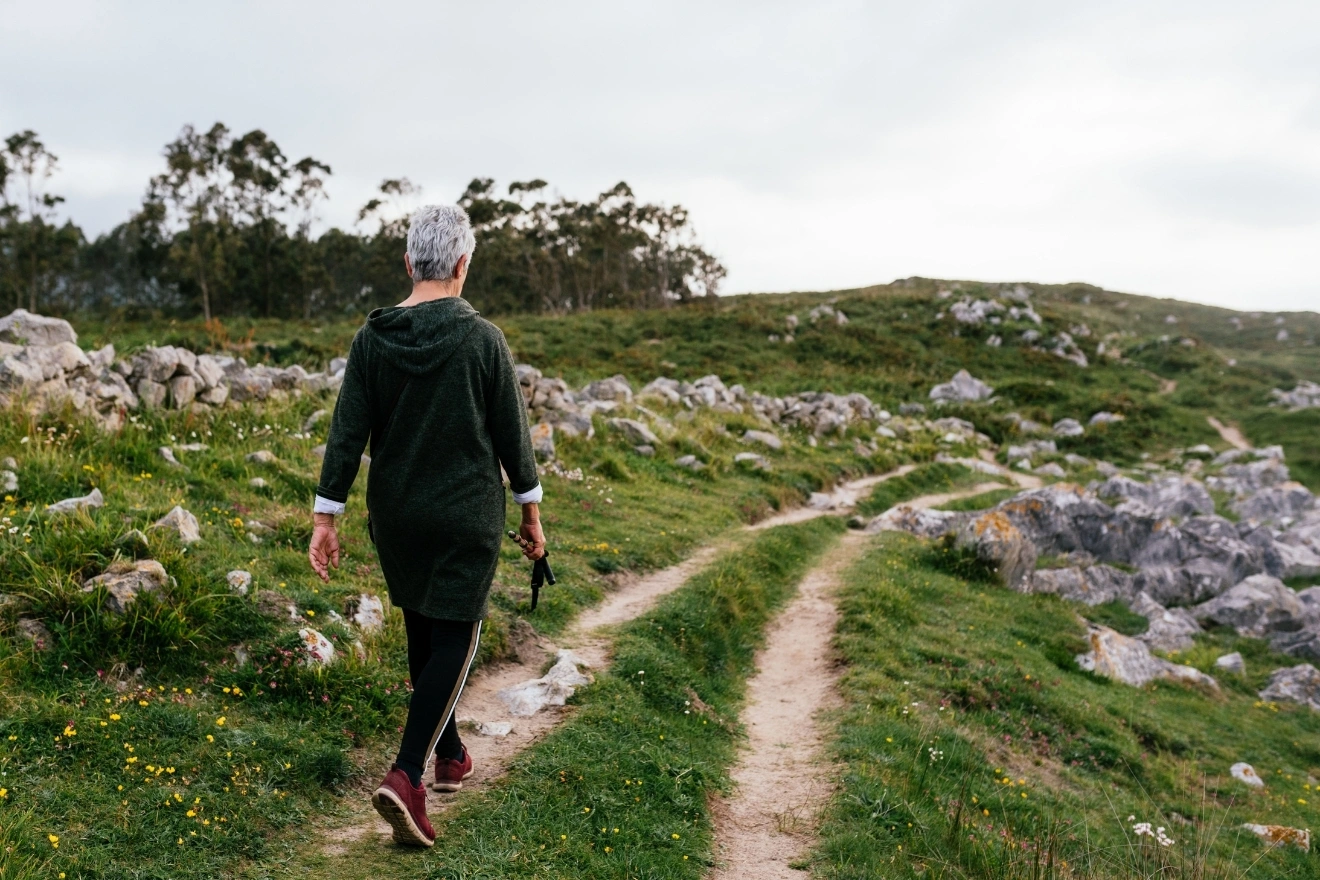
Why Outdoor Walking Is Different
Walking indoors feels predictable.
Floors are flat.
Lighting is consistent.
Obstacles are minimal.
Outdoor walking is different.
Sidewalks, trails, and parks introduce:
- uneven surfaces
- slopes
- curbs
- distractions
These environments challenge your balance system.
The Three Systems That Control Balance
Balance depends on three major systems working together.
Vision
Your eyes help detect obstacles and changes in terrain.
Inner Ear
The vestibular system senses head movement and orientation.
Muscles and Joints
Strong muscles allow the body to respond quickly when balance shifts.
Signs Your Balance May Need Attention
You might notice:
- hesitation on curbs
- grabbing railings more often
- difficulty walking on grass or gravel
These signals indicate that your balance system may benefit from training.
Exercises That Improve Balance
Simple exercises can strengthen balance responses.
Examples include:
- single-leg standing
- tandem stance (heel-to-toe standing)
- stepping drills
Practicing these movements helps the body react quickly to uneven surfaces.
The Confidence Factor
Balance training improves more than just physical stability.
It also improves confidence.
Many people avoid outdoor walking because they fear falling.
Improving balance helps restore the freedom to explore parks, sidewalks, and trails safely.
Staying Independent and Active
Maintaining balance is one of the most powerful ways to protect independence as we age.
With the right exercises and guidance, many people can dramatically improve stability.
At Vitality At Home Physical Therapy, we help adults throughout the Grand Rapids area improve balance, reduce fall risk, and stay active in the activities they love.
Call: 616-644-9155
Email: vitalityptgr@gmail.com
www.vitalityptgr.com
Because living your best life never gets old.