


Will my body handle this okay?
Long car rides. Airport walking. Sitting in unfamiliar chairs. Sleeping in a different bed. Changes in routine, medication timing, and activity levels.
These challenges don’t mean someone can’t travel—but they do mean travel deserves a little more planning.
The good news? With the right preparation, older adults can travel safely, comfortably, and confidently through the holiday season.
Why Holiday Travel Is Harder on the Body After 60
Travel places unique demands on the body, especially as we age.
Common challenges include:
- Prolonged sitting
- Increased walking distances
- Reduced movement breaks
- Fatigue
- Changes in sleep and hydration
These factors can increase stiffness, pain, balance challenges, and fall risk—especially when layered on top of winter weather.
Understanding these stressors is the first step to preventing problems.
Before You Travel: Prepare the Body (Not Just the Suitcase)
Many travel-related issues begin before the trip even starts.
1. Maintain Movement in the Weeks Leading Up to Travel
Reduced activity before travel increases stiffness and fatigue.
Even light, consistent movement helps:
- Preserve strength
- Improve circulation
- Maintain balance
This is especially important heading into winter.
2. Address Lingering Pain or Balance Concerns Early
If pain, stiffness, or unsteadiness is already present, travel can amplify it.
A physical therapy check-in before travel can:
- Identify risk factors
- Provide strategies for sitting, walking, and transfers
- Reduce the chance of setbacks during the trip
Proactive care is far easier than reactive recovery.
3. Plan Medications, Hydration, and Rest
Travel disrupts routines.
Helpful strategies include:
- Packing medications in carry-on bags
- Staying hydrated (even when it’s inconvenient)
- Planning rest periods into the schedule
Fatigue increases fall risk more than most people realize.
Car Travel Tips for Seniors
Long car rides are one of the most common triggers for holiday pain and stiffness.
Optimize Seat Position
- Sit with hips slightly higher than knees
- Use a small towel or lumbar support behind the lower back
- Adjust the seat to allow upright posture without strain
Plan Regular Movement Breaks
Aim to stop every 60–90 minutes, even if you don’t feel uncomfortable yet.
During breaks:
- Walk briefly
- Gently move hips, ankles, and shoulders
- Reset posture
Movement prevents stiffness from accumulating.
Exit the Car Mindfully
Getting out of the car after sitting can be risky.
Tips:
- Pause before standing
- Use the door or seat for support
- Avoid rushing
Many falls occur during transitions, not while walking.
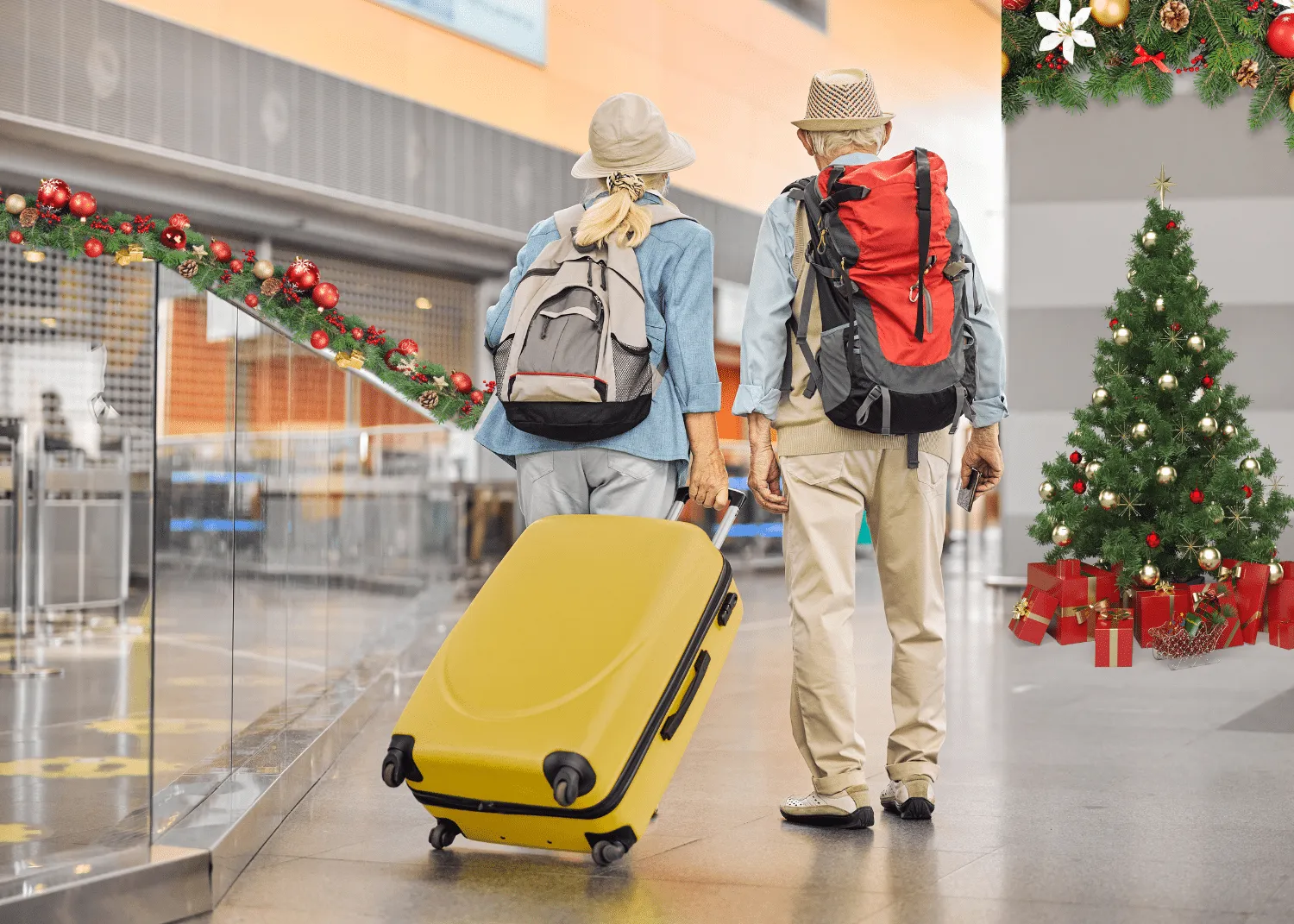
Air Travel Considerations
Airports introduce different challenges:
- Long walking distances
- Carrying luggage
- Standing in lines
- Time pressure
Helpful strategies include:
- Requesting wheelchair assistance if needed (this is support, not failure)
- Wearing supportive footwear
- Using rolling luggage instead of carrying bags
- Allowing extra time to reduce rushing
Fatigue and haste increase fall risk more than distance alone.
Once You Arrive: The Hidden Risks
Many travel-related falls happen after arrival, not during transit.
Why?
- Unfamiliar layouts
- Different furniture heights
- Poor lighting
- Area rugs or clutter
Take time to:
- Identify light switches
- Note stair locations
- Remove or avoid loose rugs
- Ask for a nightlight if needed
A short orientation can prevent a serious accident.
Sleeping in a New Bed Can Affect Mobility
Beds that are too low, too soft, or too high can make:
- Getting in and out difficult
- Balance less reliable
- Morning stiffness worse
Suggestions:
- Use chairs or bed rails for support if needed
- Take extra time during nighttime bathroom trips
- Sit briefly at the edge of the bed before standing
Transitions matter.
Managing Pain and Stiffness During the Visit
Pain during travel doesn’t usually mean injury—it means the body needs adjustment.
Helpful habits include:
- Changing positions often
- Taking short walks during the day
- Gentle stretching or mobility breaks
- Avoiding long periods of sitting or standing
Consistency matters more than intensity.
Why Travel Reveals Underlying Mobility Issues
Holiday travel often exposes issues that are easy to miss at home.
Family members may notice:
- Slower walking
- Hesitation on stairs
- Increased fatigue
- More reliance on support
These aren’t failures—they’re signals.
Travel is often the first time families realize extra support could help.
How Physical Therapy Helps Make Travel Safer
Physical therapy helps prepare the body for the demands of travel by:
- Improving strength and endurance
- Enhancing balance reactions
- Teaching safer movement strategies
- Addressing pain proactively
For many older adults, a short course of PT before travel prevents weeks of recovery afterward.
Why In-Home PT Is Ideal Before the Holidays
In-home physical therapy:
- Eliminates travel barriers
- Allows practice in real-life environments
- Addresses stairs, chairs, and layouts similar to travel destinations
- Keeps care consistent during busy seasons
It’s especially helpful when weather and schedules make clinic visits difficult.
What Families Should Watch For During Visits
If you’re visiting an aging parent, pay attention to:
- How easily they get up from chairs
- Whether they hesitate on stairs
- Changes in walking speed
- Signs of fatigue or pain
These observations can guide supportive conversations after the visit.
(You may find Is It Time to Help Mom or Dad Get PT at Home? helpful if concerns arise.)
Don’t Wait Until After the Holidays If You Don’t Have To
Many families say:
“We’ll deal with this after the holidays.”
Unfortunately, winter conditions and deconditioning can make waiting riskier.
Starting support before or during the holiday season often leads to:
- Better travel experiences
- Fewer setbacks
- Greater confidence
Final Thoughts
Holiday travel doesn’t have to be stressful or unsafe.
With thoughtful preparation, realistic pacing, and proactive support, older adults can travel with greater comfort and confidence.
Movement challenges aren’t a reason to stay home—they’re a reason to plan smarter.
Planning Holiday Travel and Want Extra Support?
If you or a loved one are preparing to travel for Thanksgiving or the holidays—and want to reduce pain, stiffness, or fall risk—physical therapy can help.
At Vitality At Home, we provide one-on-one in-home physical therapy in Grand Rapids, helping older adults prepare for travel and stay safe during busy seasons.
📞 Call 616-644-9155 to schedule an in-home assessment before your holiday plans take off.