


It’s not unusual to hear:
- “My back always acts up around the holidays.”
- “I’m so stiff by the end of the day.”
- “I’ll just rest and start moving again in January.”
The problem is that holiday habits—more sitting, less routine, and disrupted movement—often create the pain people hope will disappear on its own.
The good news? It’s absolutely possible to stay active and comfortable through the holidays without pushing through pain or giving up what you enjoy.
Why the Holidays Are Harder on the Body
The holidays don’t usually cause pain on their own. They magnify existing stressors.
Common holiday patterns include:
- Long periods of sitting (travel, meals, conversations)
- Standing for extended periods (cooking, hosting)
- Less consistent movement routines
- Increased stress and fatigue
- Cold weather that stiffens joints and muscles
Individually, these aren’t a big deal. Together, they can overwhelm the body’s ability to recover.
Why “I’ll Just Rest Until January” Often Backfires
It makes sense to think rest will help. But extended inactivity often leads to:
- Increased stiffness
- Loss of strength
- Reduced balance confidence
- Greater pain sensitivity
By January, many people feel worse—not better—and starting again feels harder than it needs to be.
Staying active during the holidays doesn’t mean doing more. It means doing enough to keep your body from losing ground.
Redefining What ‘Staying Active’ Means During the Holidays
Holiday activity doesn’t need to look like a workout plan.
Staying active can mean:
- Getting up and moving every 20–30 minutes
- Short walks around the house
- Gentle strength or balance work
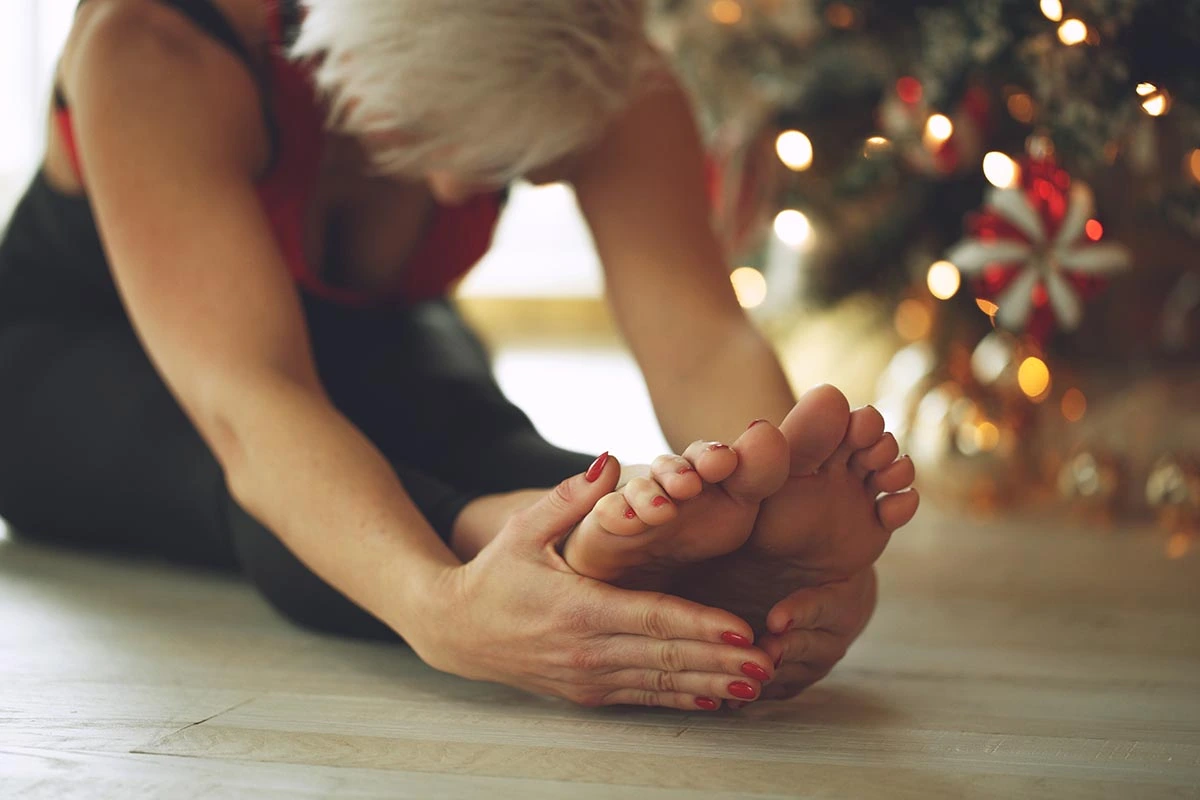
- Stretching while watching TV
- Breaking movement into small, manageable doses
Consistency matters more than intensity—especially during busy seasons.
Movement Is the Best Antidote to Holiday Stiffness
Stiffness thrives on stillness.
Even brief movement:
- Increases circulation
- Reduces joint stiffness
- Improves posture
- Decreases pain sensitivity
The key is not waiting until you feel stiff to move.
Simple Ways to Stay Comfortable During Busy Holiday Days
1. Change Positions Often
If you’ve been sitting, stand up.
If you’ve been standing, sit down.
If you’ve been in one spot, move to another.
Position changes are one of the most effective pain-management tools—and they’re free.
2. Support Your Body Instead of Forcing Posture
There’s no such thing as perfect posture during a long holiday gathering.
Instead:
- Use pillows or rolled towels for back support
- Sit with both feet on the floor when possible
- Avoid perching at the edge of soft couches for long periods
Comfortable posture is supported posture, not rigid posture.
3. Pace Activity (Especially When Hosting)
Hosting often means long stretches of standing or walking.
Helpful strategies:
- Sit during prep when possible
- Use a stool at counters
- Take seated breaks before pain sets in
- Ask for help—this is not failure
Pacing prevents flare-ups that linger for days.
Staying Active Without Triggering Pain
Pain during the holidays doesn’t mean you should stop moving. It means movement needs adjustment.
Helpful principles:
- Warm up before activity
- Avoid sudden increases in activity
- Respect fatigue
- Keep movement gentle and frequent
Physical therapy helps people find the right amount of movement—not too much, not too little.
Why Strength and Balance Matter More During the Holidays
The holidays are a high-risk season for falls and injuries due to:
- Fatigue
- Rushing
- Crowded homes
- Winter conditions
Maintaining leg strength and balance helps:
- Recover from slips
- Manage uneven surfaces
- Stay steady when tired
Even light strength work supports safety and confidence.
Pain Is a Signal—Not a Failure
One of the most important things to understand is this:
Holiday pain is usually a message to adjust, not to stop.
Pain often reflects:
- Fatigue
- Prolonged positioning
- Reduced movement variety
Responding early prevents pain from becoming a longer-term problem.
How Physical Therapy Supports Holiday Comfort
Physical therapy doesn’t just address pain—it explains it.
A PT can help:
- Identify habits contributing to discomfort
- Adjust movement strategies
- Improve strength and endurance
- Reduce flare-ups without restricting activity
This allows people to stay engaged in holiday life rather than enduring it.
Why In-Home PT Is Especially Helpful During the Holidays
In-home physical therapy:
- Eliminates travel during busy or icy seasons
- Addresses real-life seating, stairs, and routines
- Keeps care consistent despite schedule disruptions
- Makes it easier to stay proactive instead of reactive
For many older adults, it’s what makes care possible during the holidays.
Common Signs Extra Support Might Help
Consider reaching out for guidance if:
- Pain increases every holiday season
- Stiffness lasts days after gatherings
- Activity feels harder than last year
- Balance feels less reliable
- Fear of movement is increasing
These are opportunities—not setbacks.
Avoiding the ‘January Restart’ Trap
January often becomes a pressure point:
- “I need to fix everything.”
- “I fell behind.”
- “I should feel better by now.”
Staying moderately active through the holidays makes January a continuation—not a restart.
That’s a much kinder place to begin.
Movement Supports Mental and Emotional Well-Being Too
Staying active isn’t just about joints and muscles.
Movement:
- Improves mood
- Reduces stress
- Supports sleep
- Maintains confidence
During emotionally charged seasons, this matters just as much as physical comfort.
Final Thoughts
The holidays don’t have to come with increased pain, stiffness, or setbacks.
With small adjustments, realistic expectations, and the right support, it’s possible to stay active, comfortable, and confident through the season.
You don’t need to push through pain—and you don’t need to wait until January.
Want Support Staying Active and Comfortable This Holiday Season?
If the holidays tend to bring more pain, stiffness, or hesitation with movement, physical therapy can help you stay ahead of it.
At Vitality At Home, we provide one-on-one in-home physical therapy in Grand Rapids, helping older adults stay active, manage pain, and move confidently through busy seasons.
📞 Call 616-644-9155 to schedule your assessment and enjoy the holidays with more comfort and ease.