


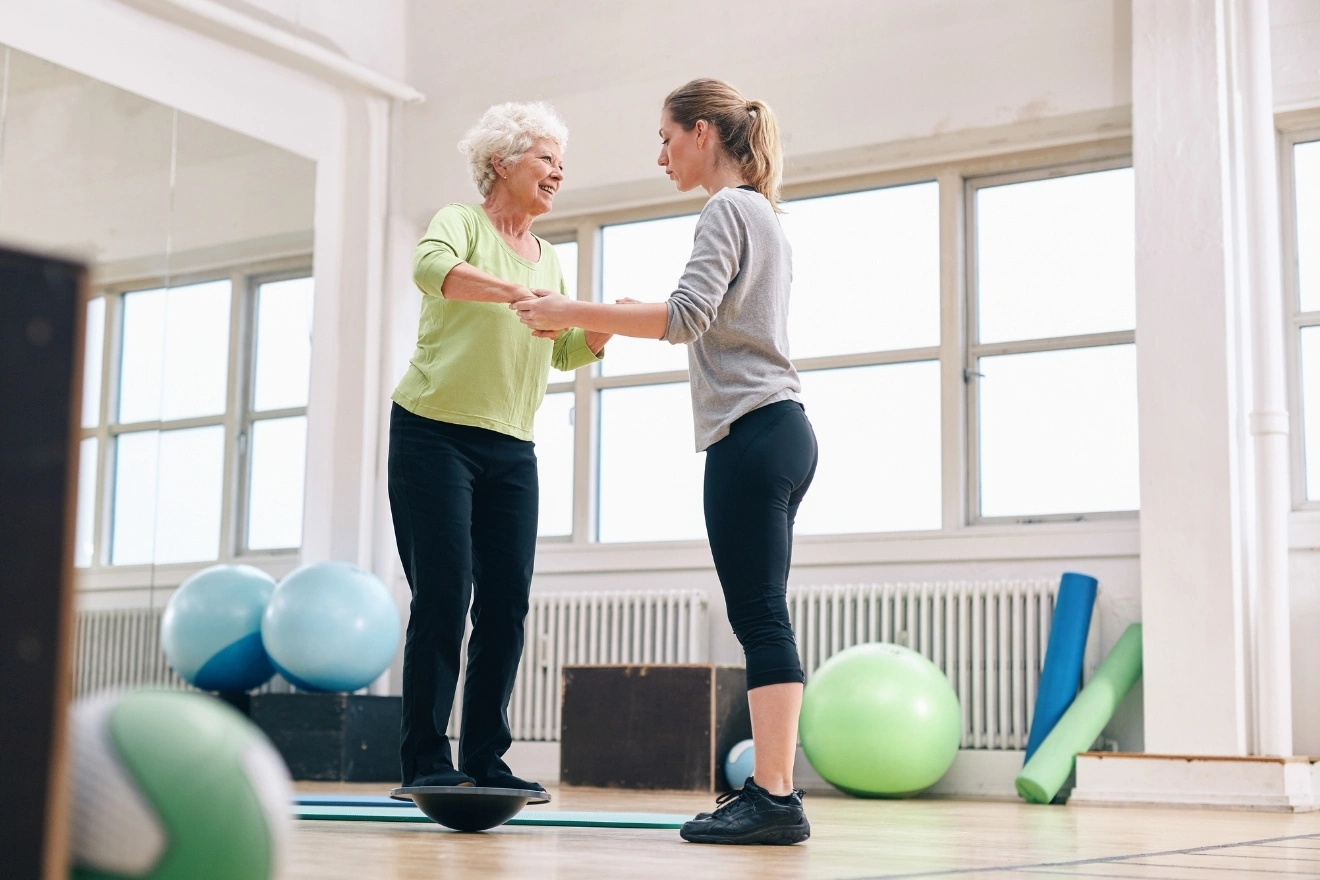
Balance Isn’t About Standing Still
When most people think about balance, they picture standing in one place.
Feet planted.
Body still.
Trying not to sway.
But real life doesn’t look like that.
Balance isn’t about how well you can stand still in a quiet room.
It’s about what happens when something unexpected throws you off.
Because that’s when your body has to make a decision—quickly.
And that decision depends on one thing more than anything else: How fast you can react.
The Moments That Matter Most
Think about the last time you felt slightly off balance.
Maybe it was:
- Catching your toe on the edge of a rug
- Stepping onto uneven pavement
- Turning quickly when someone called your name
- Navigating around something in your path
In those moments, you don’t have time to think through what to do.
There’s no pause to plan.
Your body either responds… or it doesn’t.
And the speed and quality of that response is what determines whether you recover smoothly or lose your balance.
What Reaction Time Actually Means
Reaction time is often thought of as something athletic—something that matters for sports or fast-paced activities.
But in reality, it plays a critical role in everyday movement.
Reaction time is your body’s ability to:
- Detect a change
- Process what’s happening
- Respond appropriately
And it all happens in a fraction of a second.
It’s what allows you to:
- Catch yourself when you trip
- Adjust when your footing isn’t stable
- Regain balance after a sudden shift
Without it, even strong and active individuals can find themselves in vulnerable situations.
Why Reaction Time Changes Over Time
As we work with adults 55+ in Grand Rapids, one of the most common things we see is this: Reaction time slows down gradually—and often without being noticed.
It’s not something most people actively track.
But it’s influenced by several systems in the body:
- Nervous system processing speed
- Muscle activation timing
- Coordination between joints and muscles
- Practice with quick, responsive movement
Over time, if these systems aren’t challenged regularly, they become less efficient.
The signal from the brain takes slightly longer.
The muscles take slightly longer to respond.
The movement itself becomes slightly delayed.
And while “slightly” may not sound like much…
In moments that require immediate response, it can make a significant difference.
The Gap Between Strength and Safety
One of the biggest misconceptions we see is the belief that strength alone prevents falls.
And while strength is absolutely important, it doesn’t tell the whole story.
You can have strong legs and still struggle to recover your balance.
Because strength is about what your body can do.
Reaction time is about how quickly your body does it.
If there’s a delay between recognizing a loss of balance and responding to it, your body may not be able to use that strength in time.
That’s the gap.
And it’s where many falls actually happen.
Why Traditional Exercise Often Misses This
Many traditional exercise programs focus on controlled, predictable movements.
Repetitions are steady.
Surfaces are stable.
Movements are planned.
And while this is great for building strength, it doesn’t fully prepare your body for real life.
Because real life is unpredictable.
You don’t always know:
- When you’ll need to change direction
- When your footing will shift
- When your body will be challenged unexpectedly
If your body hasn’t practiced responding to those situations, it won’t be as prepared when they happen.
What Happens When Reaction Time Slows
When reaction time begins to decline, the body often compensates in subtle ways.
You may find yourself:
- Moving more cautiously
- Avoiding quick movements
- Taking extra time before changing direction
- Feeling less stable in busy or dynamic environments
These adjustments can feel like a way to stay safe.
But they also reduce your exposure to the very situations your body needs to practice.
And over time, this can contribute to:
- Increased hesitation
- Decreased confidence
- Higher fall risk
The Connection Between Reaction Time and Confidence
There’s a strong relationship between how quickly your body can respond and how confident you feel moving through your day.
When your body trusts that it can react effectively, movement feels easier.
You don’t overthink every step.
You don’t scan for every possible hazard.
You move more freely.
But when that trust isn’t there, your brain steps in.
It slows things down.
It adds caution.
It creates hesitation.
Which is why improving reaction time doesn’t just improve safety—It improves confidence.
How Physical Therapy Improves Reaction Time
At Vitality At Home, we approach balance and mobility differently than traditional exercise programs.
We don’t just focus on strength.
We focus on how your body responds.
That means incorporating movement that challenges:
- Timing
- Coordination
- Adaptability
In ways that feel relevant to your daily life.
What This Looks Like in Practice
Instead of only practicing predictable movements, we introduce controlled unpredictability.
That might include:
- Stepping in different directions based on cues
- Changing speed or direction mid-movement
- Practicing quick adjustments in standing or walking
- Combining movement with simple decision-making tasks
These exercises are designed to help your body:
- Recognize changes more quickly
- Respond more efficiently
- Build confidence in its ability to recover
And just like anything else, the more your body practices this, the better it gets.
Why This Training Needs to Be Personalized
One of the most important aspects of improving reaction time is meeting your body where it is.
Too much challenge too quickly can feel overwhelming.
Not enough challenge won’t create change.
That’s why personalized physical therapy is so important.
At Vitality At Home, we work with adults 55+ throughout Grand Rapids to create programs that are:
- Safe
- Progressive
- Specific to your goals and environment
Whether that work happens in your home or transitions into a clinic setting, the focus remains the same: Helping your body respond with confidence in real-life situations.
The Turning Point: When Your Body Responds Without Thinking
One of the most powerful shifts we see is when someone stops needing to think about how to respond.
They catch themselves without hesitation.
They adjust naturally when something feels off.
They move through their environment with more ease.
And often, they don’t even realize it’s happening.
Until they reflect back and say: “I would have struggled with that before.”
That’s the result of improved reaction time.
Not something you consciously control—
But something your body knows how to do.
The Takeaway
Balance isn’t about being perfectly still.
It’s about being able to respond when things don’t go as planned.
And reaction time plays a central role in that.
If you’ve been feeling:
- Slower to respond
- Less steady in dynamic situations
- More cautious with movement
It may not just be about strength.
It may be about how quickly your body can react.
And the good news is—That’s something you can improve.
Ready to Feel More Responsive, Steady, and in Control?
At Vitality At Home, we specialize in helping adults 55+ in Grand Rapids improve balance, mobility, and reaction time—so you can move through your day with confidence.
Whether you prefer care in your home or in a clinic setting, our team is here to help you feel stronger, steadier, and more capable.
Call 616-644-9155
Visit www.vitalityptgr.com