


“I haven’t fallen. I just feel…off.”
Physical therapists hear versions of that sentence all the time.
Maybe you cannot point to one specific problem. You are still walking. Still driving. Still going out. But something feels different.
That feeling deserves attention—not panic, but curiosity.
“OFF” CAN MEAN MANY DIFFERENT THINGS. BALANCE IS A TEAM EFFORT.
Your vision, inner ear, sensation, strength, joint mobility, reaction speed, attention, medications, fatigue, and overall health can all influence how steady you feel.
That is why “I feel off” is not a diagnosis. It is a clue.
For one person, the issue may be ankle weakness. For another, it may be reduced sensation in the feet. Someone else may be struggling most in low light or while turning their head.
The useful question is: what situations bring the feeling out?
LOOK FOR PATTERNS. DO YOU FEEL LESS STEADY WHEN YOU FIRST STAND?
- When you turn quickly?
- On uneven ground?
- When you are tired?
- When the room is dark?
- When you are carrying something?
- When you are talking while walking?
Patterns help identify which systems are being challenged.
NEAR-MISSES COUNT AS INFORMATION. A FALL IS NOT THE ONLY EVENT WORTH TRACKING.
Catching yourself on the counter, stumbling but recovering, missing a step, or grabbing another person can all be near-misses.
A near-miss is not proof that a serious fall is coming. But repeated near-misses tell us that your body is being challenged close to its current limits.
That is a good time to investigate—not after an injury.
DO NOT LET FALL PREVENTION BECOME FEAR. THERE IS A DOWNSIDE TO TALKING ABOUT FALLS POORLY.
If every message is “Be careful,” people often respond by doing less. Less walking. Fewer stairs. Fewer outings. Less challenge.
Unfortunately, doing less can reduce strength, endurance, and balance capacity.
Good fall prevention should help you do more safely, not convince you to stop participating.
What a Movement Assessment Can Reveal
A physical therapist can look at the pieces that contribute to stability, including walking speed, leg strength, dynamic balance, endurance, transfers, mobility, and how you manage real-world tasks.
- The value is not just getting a “fall risk” label.
- The value is identifying what can be changed.
- Maybe you need more power to recover from a stumble. Maybe your walking endurance has declined. Maybe you need practice with curbs, stairs, or uneven ground. Maybe a medication or new symptom deserves discussion with your medical provider.
- Specific information leads to a specific plan.
TRUST THE CHANGE YOU NOTICE. YOU KNOW YOUR NORMAL.
If something feels meaningfully different, you do not have to wait until it becomes dramatic before asking why.
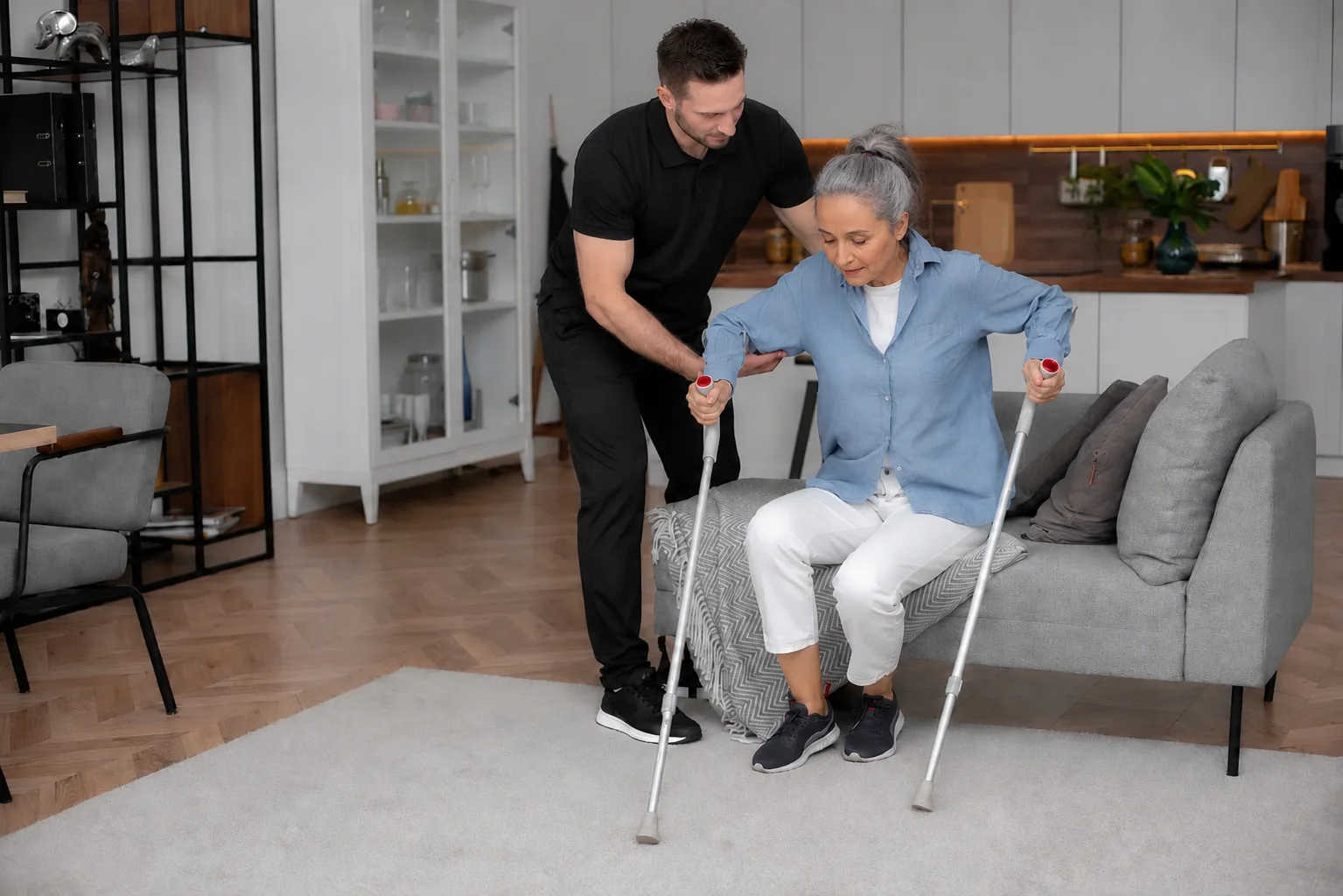
At Vitality At Home, we provide in-home physical therapy and balance assessments for older adults throughout Greater Grand Rapids and West Michigan. Our goal is to identify what is changing and help you build the strength, stability, and confidence to keep doing what matters to you.
If you have been saying, “I’m not falling, but I just don’t feel as steady,” call 616-644-9155. That is enough of a reason to take a closer look.