

Why Avoiding Activity Can Shrink Your World
“I just don’t do that anymore.”
It’s a phrase we hear often when working with older adults.
“I don’t go to concerts because the parking is too far away.”
“I don’t go down to the basement unless someone is home.”
“I stopped walking around the neighborhood.”
“I don’t travel anymore.”
“I don’t babysit the grandkids by myself.”
“I avoid restaurants because getting in and out of the booth is difficult.”
Sometimes these decisions are made because of pain. Sometimes they’re made after a fall. And sometimes they’re made simply because movement feels harder than it used to.
The intention is understandable: If I avoid the activity, I can avoid the risk.
But what many people don’t realize is that avoiding activity often creates a new problem.
Over time, it can shrink your confidence, your strength, your social connections, and ultimately, your world.
At Vitality At Home, we believe the goal isn’t to eliminate all risk from life. The goal is to build the strength, balance, and confidence needed to participate in the activities that matter most to you.
Because avoiding life isn’t the same thing as protecting it.
The Fear of Falling Is Real
Let’s start by acknowledging something important:
Fear of falling is incredibly common.
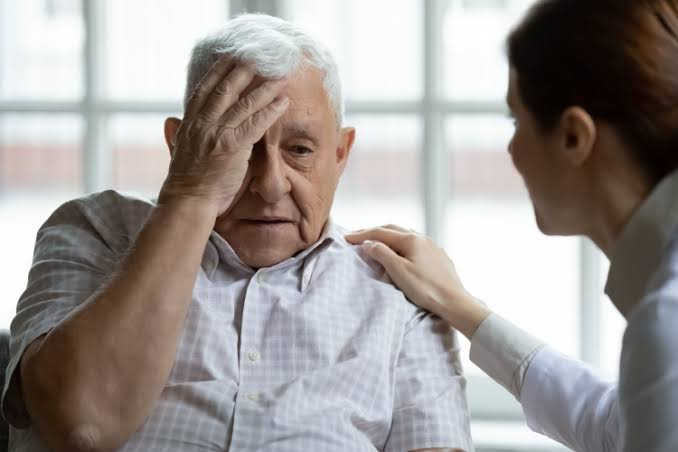
In fact, many older adults who have experienced a fall become understandably cautious afterward. Even those who have never fallen may begin worrying about losing their balance as they notice changes in strength, vision, or mobility.
Questions start to creep in:
- What if I trip?
- What if no one is around to help me?
- What if I break something?
- What if I become a burden?
- What if this changes everything?
These fears aren’t irrational.
Falls can have serious consequences.
But fear itself can also become limiting when it changes the way we move through the world.
The Fear-Avoidance Cycle
Physical therapists often talk about something called the fear-avoidance cycle.
Here’s how it works:
Step 1: A Scary Experience Happens
Maybe you fall.
Maybe you almost fall.
Maybe you have a painful flare-up.
Maybe you simply notice that you feel less steady than you used to.
Step 2: You Start Avoiding Certain Activities
You stop walking outside.
You skip exercise classes.
You avoid stairs.
You stop going to community events.
You ask someone else to do the grocery shopping.
Step 3: Your Body Begins to Decondition
Because you’re moving less, you begin to lose:
- Strength
- Endurance
- Balance
- Flexibility
- Coordination
Tasks that used to feel manageable now require more effort.
Step 4: Your Confidence Drops
Activities genuinely become harder.
The fear feels validated.
So you avoid even more.
And the cycle continues.
What began as an attempt to stay safe slowly becomes a pattern that increases vulnerability.
How Avoiding Activity Affects Your Body
The human body is designed to adapt.
Unfortunately, it adapts both positively and negatively.
When we challenge our muscles, they become stronger.
When we practice balance, our systems become more efficient.
When we walk regularly, our endurance improves.
But when we stop using those systems, they decline.
Even short periods of inactivity can contribute to:
Muscle Weakness
Strong muscles are essential for:
- Getting out of chairs
- Climbing stairs
- Carrying groceries
- Recovering from a loss of balance
Without regular use, those muscles begin to weaken.
Reduced Balance
Balance isn’t something you either have or don’t have.
It’s a skill.
And like any skill, it improves with practice.
Avoiding movement often reduces the opportunities your brain has to maintain those balance responses.
Decreased Endurance
Simple activities begin to feel exhausting.
Walking longer distances becomes more difficult.
Standing tolerance decreases.
You tire more easily.
Increased Stiffness
Movement helps lubricate joints and maintain mobility.
The less we move, the stiffer we often become.
When Your World Starts Getting Smaller
One of the saddest parts of the fear-avoidance cycle isn’t physical.
It’s emotional.
The activities people stop doing are often the ones that bring the most joy and meaning.
They stop:
- Going to church.
- Attending book club.
- Traveling with friends.
- Volunteering.
- Visiting grandchildren.
- Going out to dinner.
- Walking through the farmers market.
- Exploring new places.
At first, these changes may seem temporary.
But months turn into years.
And suddenly, life looks very different.
Not because someone wanted it to.
But because fear quietly became the decision-maker.
Safety Matters—But So Does Living
Let’s be clear:
We’re not suggesting you ignore legitimate safety concerns.
If you’re experiencing falls, dizziness, significant weakness, or changes in mobility, those concerns deserve attention.
The answer isn’t reckless behavior.
The answer is preparation.
It’s building the capacity to safely participate in the activities you value.
That might mean:
- Improving strength.
- Working on balance.
- Using an assistive device appropriately.
- Learning safer movement strategies.
- Modifying activities temporarily.
- Addressing environmental hazards at home.
The goal isn’t to avoid life.
The goal is to engage in it more safely.
Confidence Comes From Capability
Many people believe confidence comes first.
That once they “feel ready,” they’ll start moving again.
But confidence usually follows action.
You build confidence by experiencing success.
You walk a little farther.
You practice getting up from the floor.
You navigate uneven ground with support.
You climb a few stairs.
You attend one social event.
Each success teaches your brain:
I can do this.
Confidence isn’t pretending you’re not afraid.
Confidence is proving to yourself that you’re capable.
How Physical Therapy Can Help Break the Cycle
One of the greatest benefits of working with a physical therapist is having someone help you bridge the gap between fear and function.
At Vitality At Home, we don’t just ask, “What hurts?”
We ask:
- What have you stopped doing?
- What are you worried about?
- What do you miss?
- What would you do if you felt more confident?
Then we create a plan designed around your goals.
That might include:
Strength Training
To improve your ability to perform daily tasks with less effort.
Balance Training
To challenge and improve the systems responsible for stability.
Fall Prevention Education
To identify risks and develop practical strategies.
Functional Practice
To help you rehearse the activities that matter most.
Home Safety Recommendations
To make your environment support your independence.
Because treatment isn’t just about improving numbers.
It’s about helping you get back to living.
Start Small
If you’ve been avoiding activity, you don’t have to overhaul your entire life tomorrow.
Start where you are.
Maybe that’s:
- Walking to the mailbox.
- Standing up from a chair a few extra times.
- Taking a short walk around the block.
- Going to coffee with a friend.
- Attending one community event.
- Practicing your home exercise program.
Small actions build momentum.
Momentum builds confidence.
Confidence expands possibility.
Don’t Let Fear Make Your Decisions
Fear is a normal human emotion.
It often shows up when something matters deeply to us.
But fear doesn’t deserve the final vote.
You deserve to decide how you spend your days.
You deserve to participate in your community.
You deserve to pursue the activities that bring you joy.
You deserve a life that feels expansive—not restricted.
Because the goal of aging isn’t simply avoiding bad things from happening.
The goal is continuing to experience the good things that make life meaningful.
Freedom to Move Means Freedom to Live
The safest life isn’t always the fullest life.
There will always be some degree of uncertainty.
But with the right support, preparation, and training, many people discover they’re capable of far more than they thought possible.
You don’t have to let fear shrink your world.
You can build the strength, balance, and confidence to expand it again.
One step.
One outing.
One victory at a time.
Because living your best life never gets old.
Ready to Break the Fear-Avoidance Cycle?
At Vitality At Home Physical Therapy & Wellness, we help older adults improve strength, balance, mobility, and confidence so they can continue doing the things they love. If fear of falling or changes in mobility are keeping you from fully participating in life, we’re here to help.
Call us today at 616-644-9155 to schedule an appointment and take the next step toward reclaiming your freedom to move.