

“Be careful.”
“Don’t fall.”
“Maybe you shouldn’t do that anymore.”
Those phrases usually come from a loving place. But if you hear them often enough, they can change the way you think about your body.
Fall prevention should not teach older adults to be afraid of movement.
It should build the physical capacity and confidence to keep moving.
Stability Is Not the Same as Standing Still Real-life balance is dynamic.
You need it when you step over a curb, turn quickly, walk across grass, reach into the back seat, carry a laundry basket, or recover when your foot catches unexpectedly.
Standing perfectly still is only one tiny piece of the puzzle.
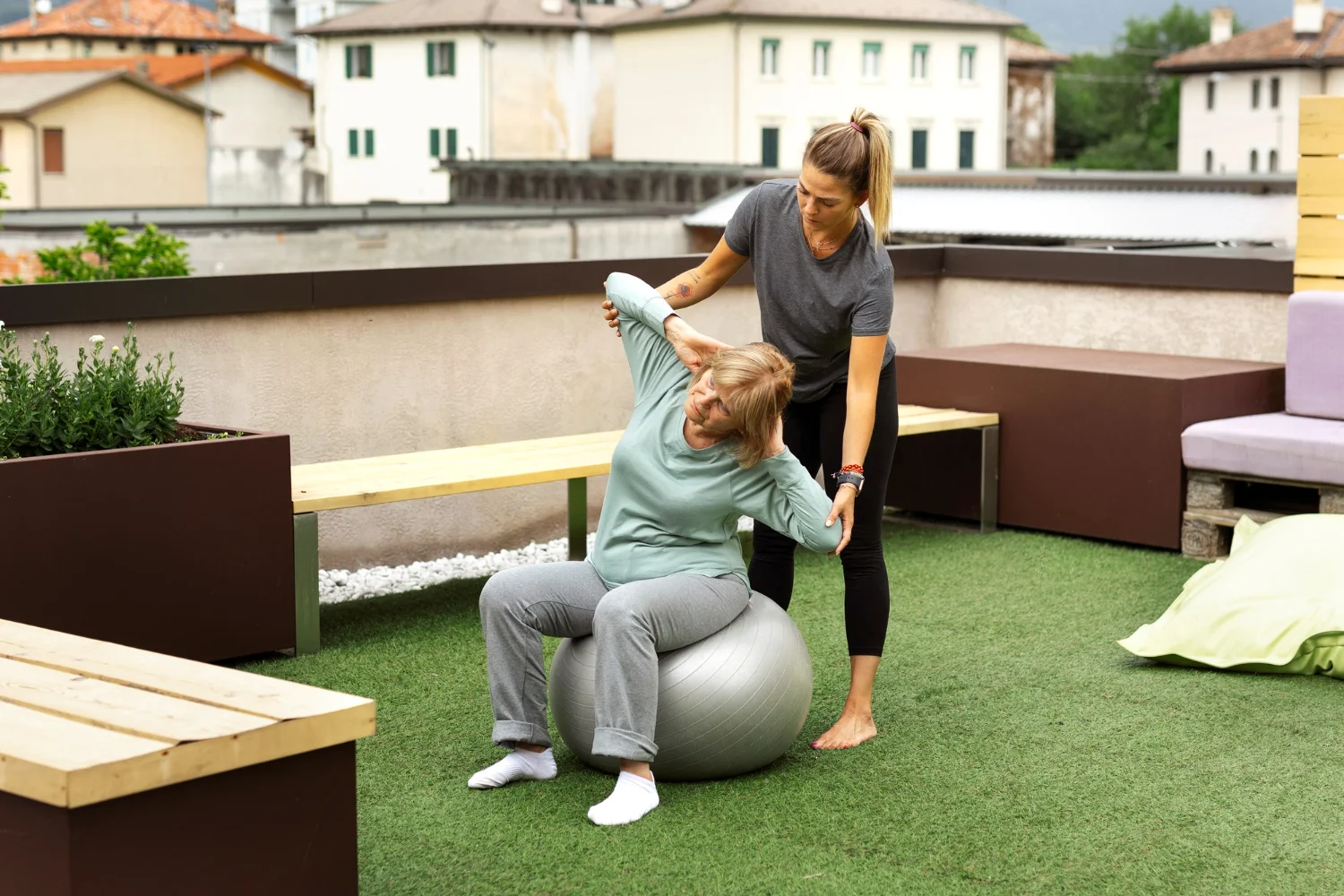
To improve stability, your body needs appropriately challenging practice.
Strength Gives You Options If you lose your balance, strength helps you respond.
Strong hips and legs help control your body. Ankle strength helps you adjust to changes under your feet. Core strength helps manage your trunk as your center of mass moves.
This is one reason strength training and balance training work so well together.
But strengthening for stability should be specific to the person. The right challenge for an active 62-year-old may be completely different from the right challenge for an 82-year-old recovering from hospitalization.
Balance Training Should Progress Doing the same easy balance exercise forever is unlikely to keep producing change.
As appropriate, balance can be challenged by changing foot position, surface, vision, head movement, speed, direction, or adding another task.
Progression matters.
So does safety. Challenging balance does not mean taking unnecessary risks. It means choosing an environment and level of difficulty where your body has to adapt while appropriate support is available.
Confidence Comes From Capability
We often talk about “building confidence,” but confidence is strongest when it is earned through experience.
- You practiced the stairs.
- You got stronger.
- You walked farther.
- You learned how to recover when you lost your balance.
- You navigated the uneven driveway successfully.
- Those experiences teach your brain, “I can handle this.”
Change the Question
Instead of asking, “What should I stop doing so I don’t fall?” try asking:
“What do I need to improve so I can keep doing this?”
That question opens the door to strength, practice, problem-solving, and adaptation.
It keeps the focus on ability.
Build a Bigger Life, Not a Smaller One
At Vitality At Home, our goal is not to wrap older adults in bubble wrap.
It is to help people maintain enough strength, balance, endurance, and confidence to continue participating in the lives they love.
That might mean walking through Frederik Meijer Gardens, traveling with family, navigating church steps, playing with grandchildren, or simply feeling confident walking through your own backyard.
Fall prevention is important. But the ultimate goal is not merely “not falling.”
The goal is staying engaged in life.
If you want to improve your stability without being told to simply “be more careful,” call Vitality At Home at 616-644-9155. We provide one-on-one physical therapy for older adults throughout Greater Grand Rapids and West Michigan.