A Parkinson’s diagnosis can make the future feel uncertain.
You may start noticing smaller steps, slower movement, stiffness, difficulty turning, changes in balance, or tasks that suddenly require more thought than they used to.
But there is another part of the Parkinson’s conversation that deserves just as much attention:
There is a lot you can do.
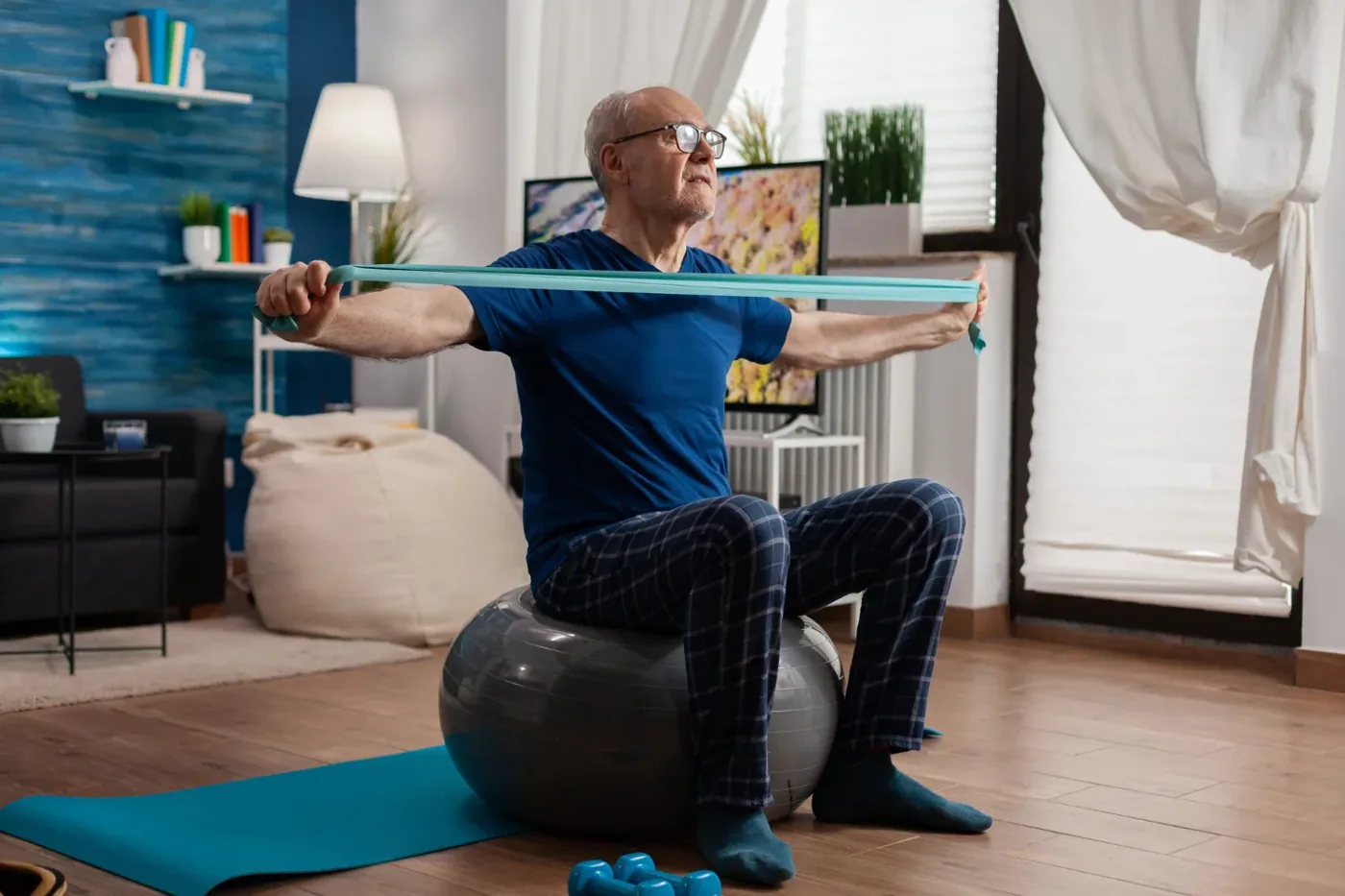
Exercise and physical therapy cannot erase a Parkinson’s diagnosis, but movement is an important part of managing the condition and maintaining function. The right program can help you work on the strength, mobility, balance, endurance, and movement strategies needed for everyday life.
At Vitality At Home, we believe Parkinson’s care should be about more than completing exercises. It should help you keep participating in the life that makes you feel like you.
Parkinson’s Can Change How You Move
Parkinson’s disease can affect movement in different ways for different people. Common changes may include:
- Smaller or shuffling steps
- Slower movement
- Reduced arm swing
- Difficulty turning
- Stiffness
- Trouble initiating movement or episodes of freezing
- Reduced balance reactions
- Difficulty getting out of chairs or bed
- Changes in posture
- Reduced endurance
- Difficulty doing two things at once while walking
These changes can make people cautious, and understandably so.
But becoming less active can create another problem. Less movement can contribute to declining strength, endurance, flexibility, and confidence.
That is why having an intentional movement plan matters.
What Does a Physical Therapist Do for Parkinson’s?
A Parkinson’s-focused physical therapist looks at how the disease is affecting your individual movement.
We may assess walking, balance, turning, transfers, posture, strength, endurance, ability to get up from the floor, and how movement changes when you are distracted or fatigued.
Then we connect those findings to your goals.
Maybe you want to:
- Keep golfing
- Travel with your spouse
- Walk confidently through the airport
- Get down on the floor with your grandchildren
- Navigate restaurants and crowded spaces
- Keep using the stairs in your home
- Get in and out of the car more easily
- Continue your regular exercise routine
Those goals become part of the treatment plan.
Why Exercise Intensity Matters
One of the biggest mistakes people can make after a Parkinson’s diagnosis is assuming exercise needs to become extremely gentle.
Safety matters, of course. But appropriate challenge matters too.
Depending on the individual, therapy may include cardiovascular exercise, resistance training, large-amplitude movement, balance training, walking practice, agility, coordination, and dual-task activities.
The goal is to challenge the systems that need to improve while adapting the program to the person in front of us.
What Is LSVT BIG?
LSVT BIG is a specialized treatment approach designed for people with Parkinson’s disease and certain other neurological conditions.
Parkinson’s can cause movements to become smaller over time. A person may feel as though they are moving normally even when their steps, arm movements, or overall movement amplitude have decreased.
LSVT BIG uses intentional, larger-amplitude movements to help recalibrate how movement feels and looks.
At Vitality At Home, Parkinson’s-specific care can incorporate principles of large-amplitude movement alongside individualized strength, balance, walking, and functional training when appropriate.
What About Freezing and Difficulty Turning?
Freezing of gait can be frustrating and sometimes frightening. People often describe feeling as though their feet are “stuck to the floor,” particularly when starting to walk, turning, moving through doorways, or navigating tight spaces.
A physical therapist can teach individualized strategies that may help a person initiate or continue movement. We can also practice turning, changing direction, navigating obstacles, and responding to common triggers in a controlled environment.
Because Vitality At Home currently provides mobile outpatient therapy, we have a unique opportunity to practice these skills where they actually happen—your hallway, kitchen, stairs, front entrance, driveway, or community.
What If I Am Doing Pretty Well Right Now?
That may be one of the best times to establish a relationship with a Parkinson’s-focused physical therapist.
You do not have to wait for a major decline.
An evaluation can establish a baseline for your strength, balance, walking, endurance, and mobility. It can also help you develop an exercise plan that is appropriately challenging for your current abilities.
Parkinson’s is a condition that can change over time. Your exercise program should be able to change with you.
Keep Training for the Life You Want
A diagnosis may change some things, but it does not erase your goals.
At Vitality At Home, we provide individualized Parkinson’s physical therapy for adults throughout Grand Rapids and surrounding communities. Our goal is to help you remain as active, capable, and engaged as possible.
We want to know what you want to keep doing…and then train for it.
Looking for Parkinson’s Physical Therapy in Grand Rapids?
If you or someone you love has Parkinson’s disease and wants a more individualized approach to movement, call Vitality At Home at 616-644-9155 to schedule an evaluation.
Your diagnosis is part of your story. It does not have to become the whole story.