Foot & Ankle Pain Treatment in Grand Rapids
Every step keeps reminding you that something is not right. If you have learned to walk around the pain instead of through it, one evaluation changes what happens next.
What causes foot and ankle pain?
Foot and ankle pain usually does not announce itself all at once. It builds from minor imbalances in how you walk, the shoes you wear, the surfaces you stand on, and how your feet and ankles share the load with the rest of your leg. Understanding what has gradually tipped your feet into pain is the real key to walking without it again.
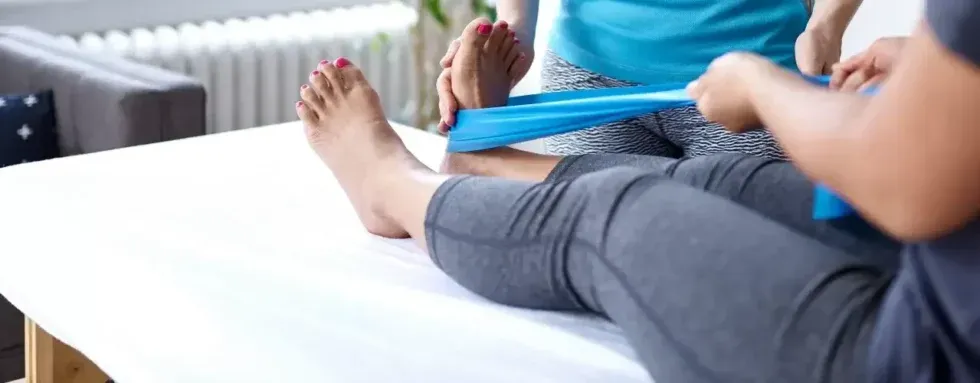
A sprain stretches or tears the ligaments that hold the ankle together. Even a "mild" sprain leaves the ankle less stable if it was never fully rehabbed. Months or years later, the ankle still feels weak, swells easily, or gives way without warning. Incomplete healing is not permanent, but it takes targeted work to restore the balance and proprioception the ankle lost.
The plantar fascia is a band of tissue running along the sole of the foot. When it is overloaded, strained, or held under constant tension, it inflames and sends sharp pain through the heel and arch, especially with the first steps of the day. The pain comes from a combination of foot mechanics, calf and arch flexibility, and load patterns that repeat every day.
The Achilles tendon connects your calf to your heel and takes the brunt of every step you take and every stair you climb. When it is overworked without adequate recovery or if your calf is too tight and inflexible, it becomes irritated and painful. Pain in the back of the ankle or heel when walking or climbing stairs is a clear signal the tendon needs specific loading and mobility work.
How your foot naturally arches and how your ankle sits affects how force travels up your leg with every step. Flat feet or high arches that lack flexibility force other parts of the foot to compensate, leading to pain in the arch, heel, or the outer edge. Improving foot stability and arch control changes how the entire lower leg functions.
New shoes, a change in activity level, or spending more time on your feet can overload feet that were not ready for the change. Tight shoes crowd the forefoot. Shoes without support let the foot collapse. A sudden increase in walking, standing, or time on your feet puts stress on tissues that are not conditioned for it. The foot adapts, but it needs time and help.
Old foot or ankle injuries can leave scar tissue that limits how the joint moves or how muscles fire. A broken bone that healed but was never rehabilitated leaves the ankle weaker than it was before. Scars from surgery tighten the soft tissue around the joint. Addressing old damage takes specific movement and loading work to restore full function.

How physical therapy in Grand Rapids helps.
Your feet were not built to hurt with every step, and steady, pain-free footing is also your first line of defense against falls. Physical therapy restores the ankle and foot to what they should be: stable, flexible, and able to handle the ground beneath you. Because we come to your home, we assess the surfaces you actually navigate every day, your stairs, thresholds, rugs, and the path from your bed to the bathroom, so what we work on matches real life. We start by finding exactly what has gone wrong, whether it is an old sprain, arch collapse, calf tightness, or the way you walk. From there we use hands-on manual therapy to release tight tissue and restore mobility, then rebuild the strength, balance, and control an unstable ankle needs to keep you upright and confident. You do not need a referral to start, Michigan is a direct-access state, and we help you understand your coverage first. The goal is feet and ankles that stay strong and steady long after our visits end.
What to expect from your recovery.
Evaluation
We assess how your foot moves, how you walk, and where the pain comes from. We check your ankle stability, your arch, your calf flexibility, and how your whole leg works together. You leave understanding exactly why your foot hurts and what we are going to do about it.
Hands-on care and mobility
We use manual therapy and targeted stretching to release tight muscles in your calf, foot, and ankle. We restore the flexibility your foot has lost so it can move and function the way it was built to. Each session builds on the last.
Strength and stability
As pain drops, we rebuild. We strengthen your foot and ankle muscles, improve your balance, and teach your foot to support you during all the movements your life requires. The strength we build is what keeps the pain from returning.
Every step should feel steady and pain-free. We get to the root of what is happening in your foot and ankle, so you can trust your footing again.
Pain rarely travels alone.


Hip & Knee Pain
When feet and ankles do not work right, the knee and hip often compensate and end up in pain. We treat the whole chain.

Balance & Gait Disorders
Balance problems often start with weak or unstable feet and ankles. Restoring foot strength restores balance.

Joint Pain
Pain in one joint often overloads the next. We treat the foot, ankle, and the joints that share the load to restore steady, pain-free movement.